



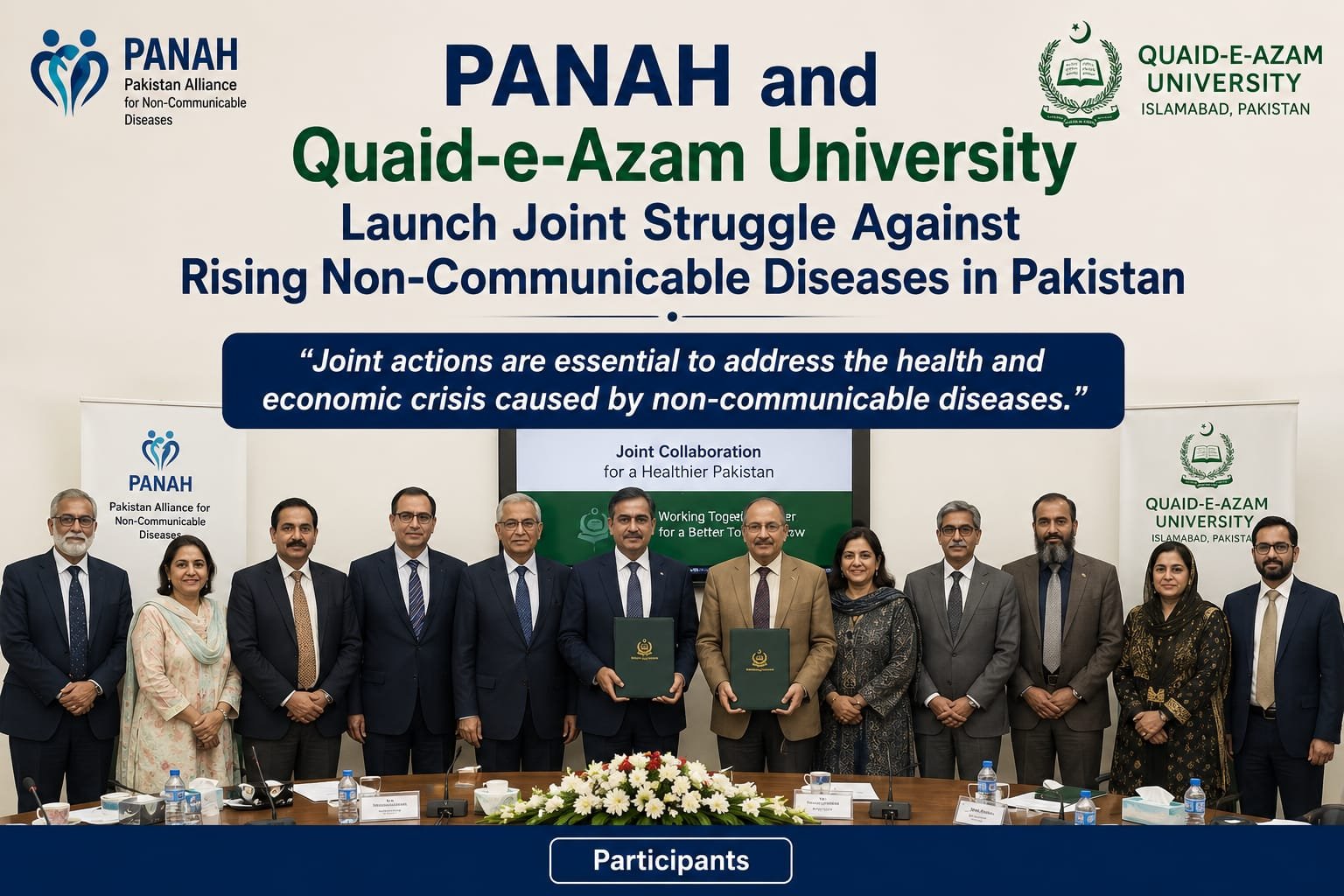
PANAH and Quaid-e-Azam University Launch Joint Struggle Against Rising Non-Communicable Diseases in Pakistan
“Joint actions are essential to address the health and economic crisis caused by non-communicable diseases.” Participants
Islamabad: Pakistan National Heart Association (PANAH) and Quaid-e-Azam University have signed a Memorandum of Understanding (MoU) to reduce the growing rate of non-communicable diseases in Pakistan and to address their negative impacts on health, economy, and society through mutual cooperation.
The agreement was finalized at a ceremony held at the university campus between the Vice Chancellor of Quaid-e-Azam University, Professor Zafar Nawaz Jaspal, and the PANAH delegation, which included General Secretary PANAH Sana Ullah Ghumman. The event was attended by PANAH Executive Member Mr. Abdul Hafiz and faculty members of Quaid-e-Azam University.
Speaking on the occasion, Sana Ullah Ghumman said that heart diseases, diabetes, obesity, cancer, high blood pressure, and stroke are increasing at an alarming rate in Pakistan. More than 60 percent of deaths in Pakistan are caused by non-communicable diseases, while unhealthy diet, tobacco use, sugary drinks, lack of physical activity, and ultra-processed foods are major causes of these diseases. He further said that non-communicable diseases are not only a health issue but also a serious economic challenge, as billions of rupees are spent every year on treatment and loss of productivity. He stated that if immediate policy actions and public awareness are not promoted, this burden will continue to increase on families and the national health system.
The Vice Chancellor of Quaid-e-Azam University, on this occasion, emphasized the importance of cooperation between academia and civil society, saying that this partnership will play an important role in promoting research, awareness, and evidence-based policy making. He said that this cooperation will promote scientific research, increase youth engagement, and strengthen national efforts to eliminate preventable diseases in Pakistan.
Both institutions reiterated their commitment to jointly work for public awareness campaigns and the need for evidence-based policies to promote public health, including promotion of healthy food, effective control of tobacco use, and promotion of physical activity, so that future generations can be protected from the growing epidemic of non-communicable diseases.