



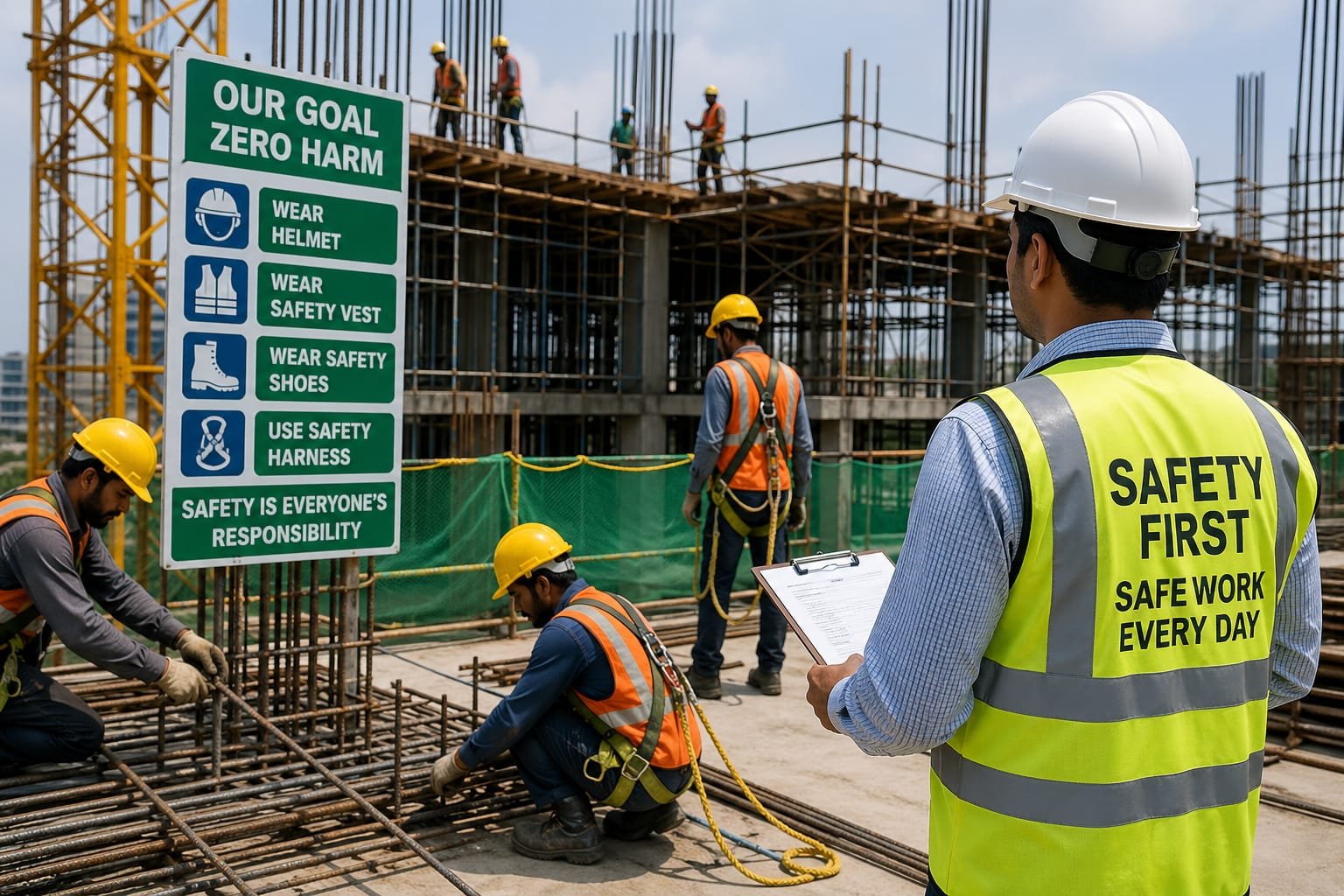
Pakistan approves Occupational Safety and Health Code of Practice for the Construction Sector
New Code sets legally binding standards to strengthen safety and health protections for workers across the construction industry
Islamabad – 28 April 2026 (Adnan Hameed) : The Government of Pakistan has approved the national Code of Practice on Occupational Safety and Health (OSH) in the construction sector, marking a key step towards strengthening safety and health protections for workers across one of the country’s largest and most hazardous industries.
Construction is one of the most dynamic sectors of Pakistan’s economy. It creates jobs, drives growth, and supports major national development priorities. But it is also one of the sectors where workers face the greatest risks. High accident rates, unsafe working environments, and lack of proper safety measures not only affect workers, but also lead to significant economic losses for enterprises and for the country as a whole.
The development of the Code has been supported through a tripartite process bringing together government, employers and workers, co-led by the ILO and Pakistan Engineering Council (PEC), at the request of the Government of Pakistan.
Issued through a Statutory Regulatory Order (SRO), the Code establishes legally binding minimum requirements to protect workers and other persons in and around construction sites. It applies to a wide range of activities, including building works, civil engineering projects, infrastructure development, and demolition.
The Code applies to all categories of construction workers, including those in the informal economy, and promotes equal access to occupational safety and health measures without discrimination. It also encourages the adoption of improved practices and technologies to enhance workplace safety.
The Code is grounded in internationally recognized standards, including the ILO Code of practice on OSH in construction, and aligned with national regulatory frameworks. It provides a comprehensive framework across the full lifecycle of construction projects—from planning and design to procurement and implementation. It also introduces provisions to strengthen inspection, enforcement and corrective measures, supporting improved compliance across the sector.
Geir Tonstol, Country Director for ILO Pakistan, said “This is an important step towards improving safety and health in one of Pakistan’s highest-risk sectors. It reflects the shared commitment of government, employers and workers to strengthen protections for those working on construction sites, says press note. With clear and enforceable standards now in place, the focus must shift to implementation to ensure that all workers are better protected.”
Its implementation will be led by relevant federal and provincial authorities, along with regulatory and enforcement bodies responsible for occupational safety and health. The Code will come into force one year after its notification, allowing time for its adoption and effective implementation across the country.