



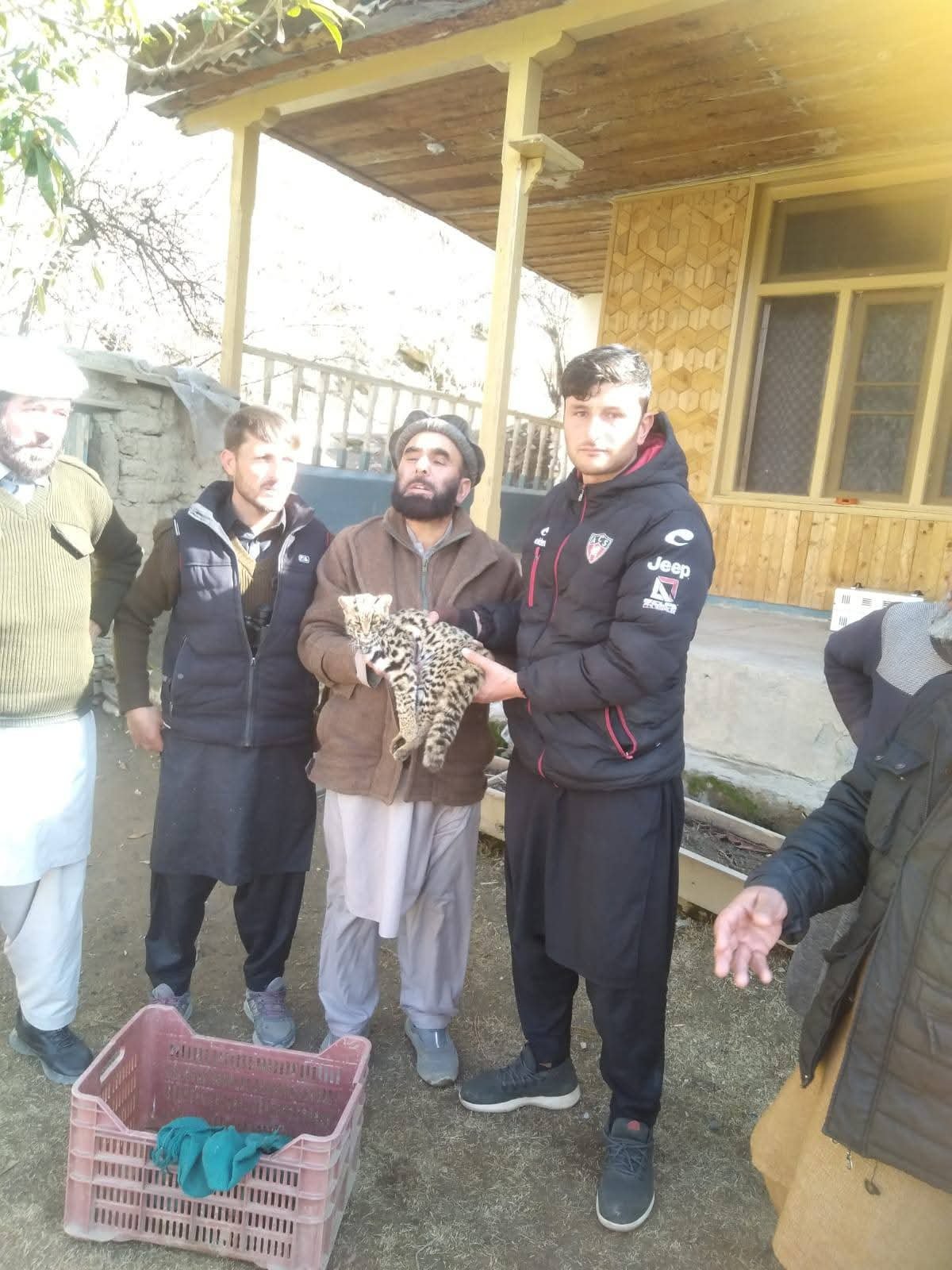
A reported snow leopard cub capture in Broz village, Lower Chitral, turned into a
different reality after experts confirmed the animal was a leopard cat. The swift
response by the Snow Leopard Foundation Pakistan and the Wildlife Department
prevented public alarm and ensured the animal’s safety.
On February 12, 2026, villagers informed authorities that they had captured what
they believed was a snow leopard cub. Because snow leopards carry ecological and
cultural weight in northern Pakistan, officials treated the information as urgent.
Wildlife Watchers and members of the Village Conservation Committee reached the
site immediately. Field experts conducted a physical examination and confirmed that
the animal was a leopard cat, not a snow leopard.
This careful handling reflects growing coordination between communities,
conservation groups, and government departments. It also highlights the need for
correct species identification before sharing information that may alarm the public.
Medical Care and Recovery Underway
Officials transported the animal to the Veterinary Hospital in Chitral for a complete
medical check. Doctors found no fractures, no visible injuries, and no internal
trauma. The leopard cat remained stable, and veterinary staff provided precautionary
treatment to ensure full recovery.
Authorities then handed the animal to the Wildlife Division for monitoring. Wildlife
staff now conduct daily medical check-ups and keep the animal under close
observation. According to officials, the leopard cat is recovering well due to medical
care and careful handling. Once veterinarians confirm full fitness, authorities will
release the animal back into the wild at the same location where villagers found it.
This step will reduce stress on the animal and prevent ecological disturbance in its
natural habitat.
Why Leopard Cats Matter
Although smaller than snow leopards, leopard cats play a vital role in maintaining
ecological balance. Director Snow Leopard Foundation Dr Muhammad Ali Nawaz
said that research shows that leopard cats in northern Pakistan feed mainly on
rodents, especially members of the Muridae family. By controlling rodent populations,
leopard cats help protect crops and reduce disease risks in rural areas.
Researchers analyzed 38 faecal samples and identified 18 prey species, including
mammals, birds, amphibians, and fish. The study showed that leopard cats adapt to
different habitats, from moist temperate forests to dry mountain valleys. However,
habitat loss, hunting, and illegal trade still threaten their survival in parts of Asia.
Recommendations for Conservation
The research emphasizes regular scientific monitoring, community awareness, and
habitat protection as key measures for species survival. Experts recommend using
modern DNA tools to study diet and distribution because these methods help
authorities understand how predators maintain environmental balance. Furthermore,
wildlife departments must strengthen public education to prevent unnecessary
capture of wild animals.
The Chitral incident therefore offers an important lesson. When communities report
responsibly, and when authorities verify facts before spreading information, wildlife
protection strengthens. More importantly, when injured or captured animals receive
timely care and return safely to the wild, conservation moves from paperwork to
practice.
Faheem Akhtar,
Communication Officer,
Snow Leopard Foundation ,
Pakistan.
+923444344219