



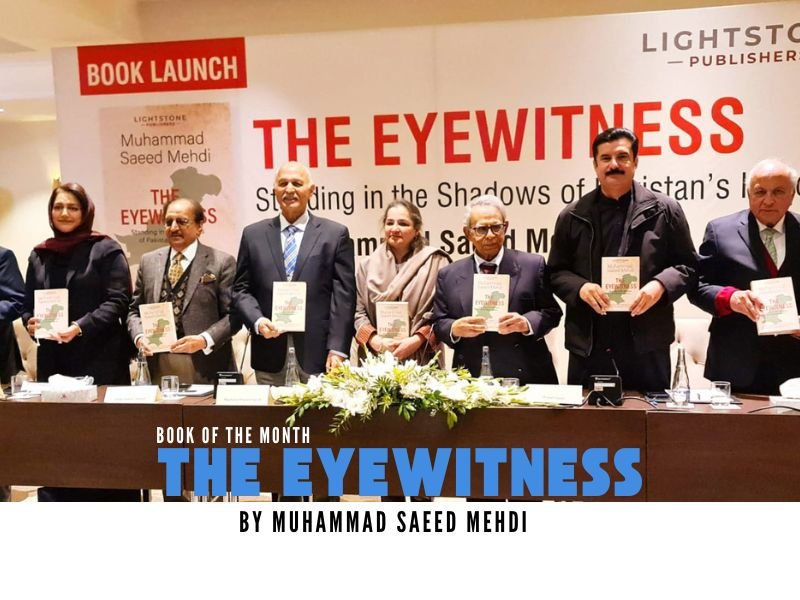
The launch of Muhammad Saeed Mehdi’s memoir ‘Eyewitness’ brought together diplomats, civil servants, and scholars, offering firsthand insights into Pakistan’s political history through reflections from distinguished speakers.
Lightstone Publishers formally launched The Eyewitness: Standing in the Shadows of Pakistan’s History in Islamabad, the memoir of senior civil servant Muhammad Saeed Mehdi, former principal secretary to Prime Minister Nawaz Sharif and ex–chief secretary Sindh. Based on decades in the corridors of power, the book offers a firsthand account of Pakistan’s defining political moments.
The well-attended launch brought together over 500 guests, including leading politicians, diplomats, journalists, and literary figures, reflecting strong interest in insider political narratives.
Ameena Saiyid of Lightstone Publishers described the memoir as one of the house’s most significant publications, shaped by the author’s rare life experiences. Senior journalist Asma Sherazi called Mehdi a “chosen witness” to history, terming the work a vital factual record spanning events from the fall of Dhaka to Kargil.
On stage, Muhammad Saeed Mehdi described the memoir as an attempt to document what he termed “living history”, a faithful, descriptive account of events he personally witnessed over decades of service at the highest tiers of government. Emphasizing honesty as the book’s guiding principle, he remarked, “The gist of my book is this: the thing everyone is afraid to say, you write that thing,” underscoring his commitment to candor and factual precision.
Senior journalist and editor Malik Zahoor Ahmed described the memoir as a rare and defining contribution, one that places historical events, rather than the author himself, at the forefront, engaging readers while narrating the truth with responsibility and a deep sense of national care. Journalist and political analyst Nasim Zehra commended Mehdi’s firsthand professional vantage point, noting that his role as an eyewitness lends the work both authenticity and credibility.
Testimonials from Audience
Mr. Habib ur Rehman
At the launch, Mr. Habib ur Rehman praised Mr. Saeed Mehdi as a highly articulate and deeply well-read individual whose professional competence positioned him to witness and engage with many defining chapters of Pakistan’s political history. Having observed eras spanning from General Zia-ul-Haq to Zulfikar Ali Bhutto and Nawaz Sharif, Mehdi experienced firsthand the workings of power and the personalities that shaped national events. Mr. Rehman noted that this rare depth of exposure is what lends Eyewitness its authenticity and historical significance. Reflecting more broadly, he observed that history neither repeats itself nor conceals the truth—reality ultimately surfaces with time, bringing clarity to events and decisions. He also expressed sincere gratitude to Mr. Mehdi for documenting these lived truths despite formidable odds, acknowledging the dedication and personal resolve required to bring such experiences into the public domain.
Mr. Asif Shah
Mr. Asif Shah, a former civil servant, remarked that although he had not yet read the book in full detail, he regarded Mr. Saeed Mehdi as an icon who had lived through the very history he has documented. Serving alongside key leaders including Nawaz Sharif, Shahbaz Sharif, General Zia-ul-Haq, and Pervez Musharraf, Mr. Mehdi witnessed critical phases of Pakistan’s governance from close quarters. Mr. Shah emphasized that the experiences and observations presented in Eyewitness are therefore topical and deeply relatable, particularly for readers seeking insight into the country’s political and administrative evolution. He added that the book promises to be an engaging and meaningful read and expressed hope for its wide success among diverse audiences.
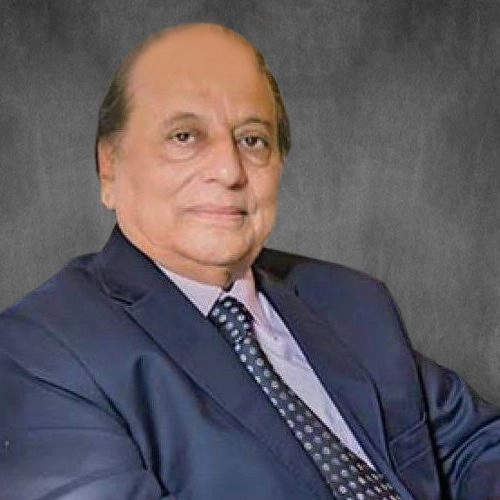 Muhammad Saeed Mehdi described the memoir as an attempt to document what he termed “living history.”
Ambassador Fouzia Nasreen
Reflecting on the occasion, Ambassador Ms. Farkhanda shared that the comments she heard from various speakers were remarkable, especially in highlighting how Mr. Saeed Mehdi had been a witness to such significant historical developments and was able to narrate them with depth and clarity. She praised his exceptional memory and his ability to recall events in vivid detail, describing this as especially impressive. She noted that the speakers explored many pertinent aspects of the book, offering valuable insights into its scope and substance. Calling the event wonderful, she added that she thoroughly enjoyed the experience and felt that hearing these perspectives would make it easier to approach the book with greater understanding. The discussions, she said, had already provided a meaningful gist of its contents and affirmed that it is well worth reading.
Together, the reflections shared at the launch underscored Eyewitness as more than a personal memoir it is a firsthand national chronicle, capturing the human dimension behind Pakistan’s political history and offering readers an intimate vantage point into moments that shaped the state and its institutions.