



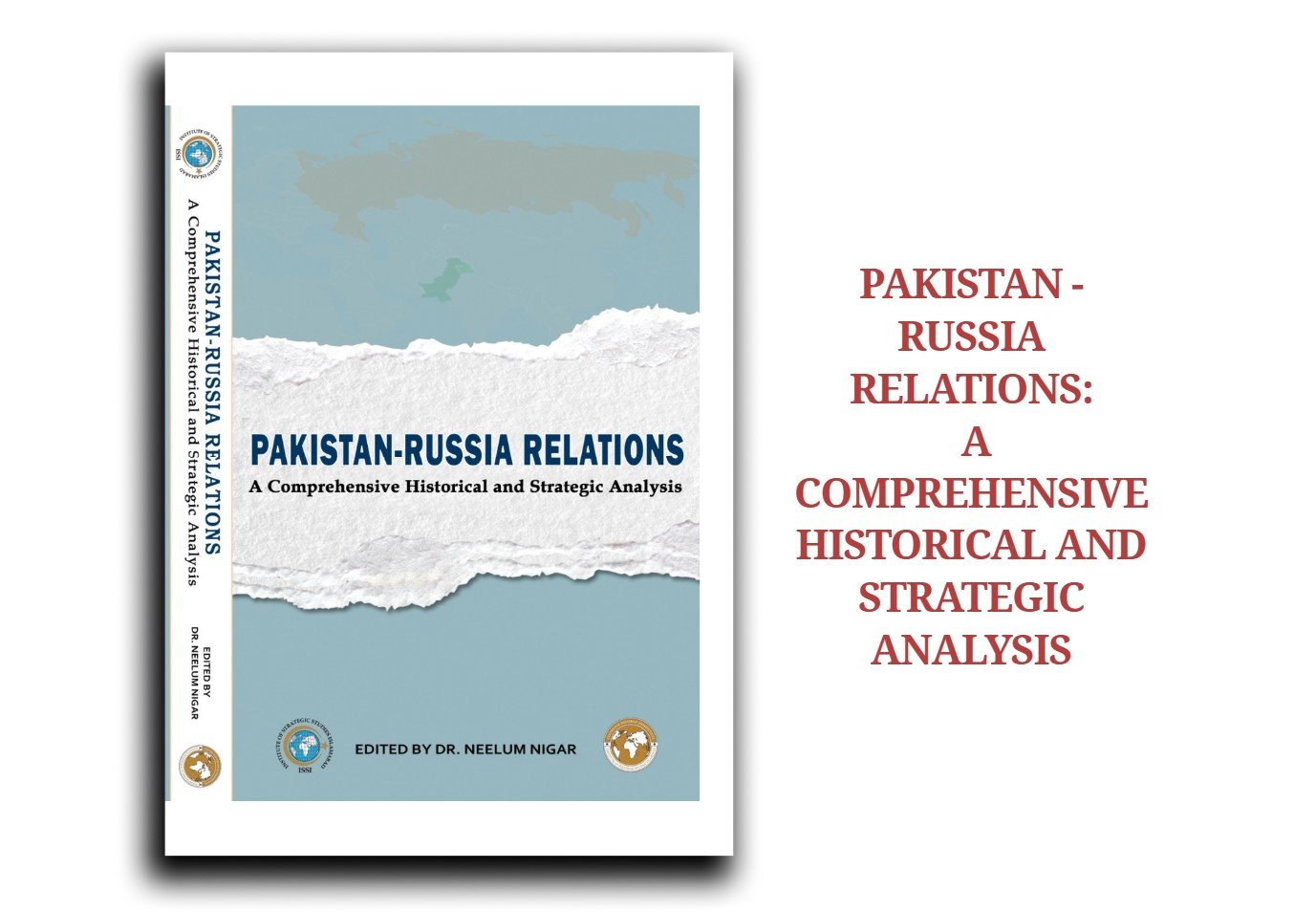
In an era of shifting geopolitical alignments, Pakistan–Russia Relations: A Comprehensive Historical and Strategic Analysis emerges as not only a timely scholarly contribution but also the first book of its kind in Pakistan to offer a truly comprehensive, multidimensional, and forward-looking examination of this important bilateral relationship. Edited by Dr. Neelum Nigar, the volume fills a long-standing gap in Pakistan’s foreign policy literature by bringing together leading experts from both Pakistan and Russia and presenting the bilateral relationship through a well-structured, multi-perspective lens. The timing of this book, amid global uncertainty, new diplomatic openings, and Eurasian realignments ,makes its publication especially significant.
The volume is neatly organized into four thematic sections. The first, centred on historical foundations, features a remarkable eyewitness account by Ambassador Qazi Khalilullah. His chapter provides valuable diplomatic insights into the evolution of ties from the early Cold War period to the breakthroughs in the post-2014 era, including defence cooperation and political dialogue. Dr. Olga A. Kharina’s contribution complements this narrative with a systematic assessment of post-Soviet realignments, explaining how Afghanistan’s instability, emerging regional threats, and new economic opportunities helped pave the way for rapprochement. Together, these chapters present a nuanced historical backdrop that is crucial for understanding the complexities of contemporary Pakistan–Russia dynamics.
The second section focuses on strategic and security cooperation, with chapters by Prof. Shabir Ahmad Khan, Dr. Nikolai Plotnikov, and Dr. Khuram Iqbal. These contributions highlight the pragmatic shifts in both countries’ diplomatic approaches, growing trust in security dialogues, and the evolving convergence on regional issues such as counter-terrorism, Afghanistan, and defence cooperation. Joint military exercises, enhanced intelligence exchanges, and expanding diplomatic engagement are presented as clear indicators of a relationship that is no longer defined by Cold War-era mistrust but by shared regional imperatives.
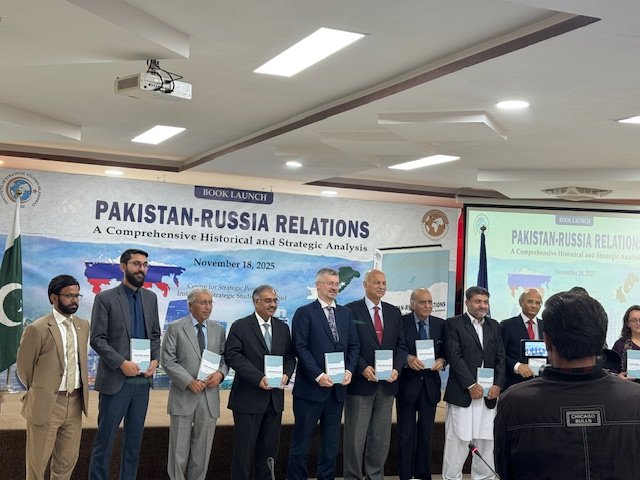
Section III, dealing with economic, energy, and technological cooperation, is one of the strongest parts of the book. Dr. Ashfaque Hasan Khan and Dr. Afia Malik provide an informed and realistic assessment of bilateral trade, energy diplomacy, and investment prospects. Their analyses help ground the discussion in economic realities. Meanwhile, chapters by Taimur Fahad Khan, Dr. Daria Saprynskaya, and Dr. Adam Saud broaden the focus by examining emerging domains such as green energy, advanced technologies, and Eurasian connectivity. Discussions on the Pakistan Stream Gas Pipeline, North–South transport corridors, and Central Asia–Russia–Pakistan trade routes highlight the untapped geoeconomic potential inherent in Pakistan–Russia ties. These chapters collectively push the debate beyond traditional diplomatic narratives and into the realm of long-term strategic planning.
The final section brings societal ties and multilateral frameworks into focus. Dr. Irina Serenko explores cultural diplomacy, educational exchange, and shared civilizational touchpoints; Dr. Saira Abbasi assesses the role of SCO and BRICS in offering new multilateral avenues for cooperation; and Dr. Natalia Melekhina concludes the book with a set of thoughtful policy recommendations. Together, they demonstrate that societal and institutional linkages, long overshadowed by geopolitical considerations, are becoming increasingly important pillars of bilateral engagement.
One of the key strengths of this volume is its balanced and inclusive approach, featuring voices from both sides of the equation. By integrating Pakistani and Russian scholarly perspectives, the book avoids the common limitation of one-sided narratives and instead offers readers a holistic understanding of the motivations, concerns, and aspirations that shape bilateral relations. Its analytical clarity and accessible tone make it suitable not only for academics but also for policymakers, journalists, and general readers.
Yet, as with any ambitious volume, a few areas could be developed further. The economic chapters, while strong, could benefit from deeper discussion on private-sector engagement and the challenges of financial transactions under evolving sanctions regimes. Similarly, the cultural diplomacy section might have incorporated more insights on digital exchanges and contemporary media interactions. These are, however, minor gaps and do not detract from the overall value of the work.
The writer can be contacted at muhammad.taimur.khan@issi.org.pk